
Your system operates automatically
Our standard water softener uses a Clack Professional control valve, programmed during installation for your home’s water conditions and household needs.
During normal operation, you do not need to change settings or press buttons. Keep salt in the tank and contact us if you notice an error message, a leak, or a change in performance.
How to bypass your water softener
Normal operation
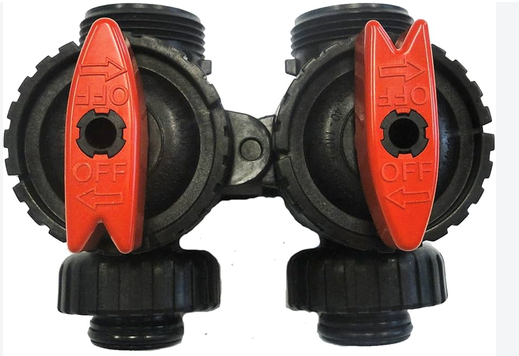
Both red handles are parallel. Water flows through the softener.
Bypass mode
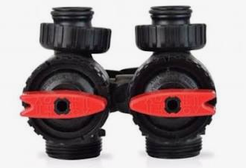
The red arrows point toward each other. Water flows around the softener.
For the Clack Professional bypass valve described here, turn both red handles clockwise until the arrows point toward each other. The handles will be horizontal, parallel to the ground.
In this position, water flow to the softener is shut off while water can continue flowing to your home. Your water will temporarily bypass treatment until the system is returned to normal operation.
Contact us for assistance after bypassing the system. If a leak continues, shut off the home’s main water supply.
These directions apply to this valve configuration. Refer to your equipment manual’s diagrams if your valve looks different.
Recommended salt
We recommend water softener salt pellets, commonly sold in yellow bags.
Our preferred product comes in a yellow bag with an outline of the state of Utah on the packaging and is available at many local retailers. Other quality water softener salt pellets are also acceptable. Check that the label says water softener salt pellets, since packaging colors can vary.
Keep at least 8 inches of salt in the tank
For the systems we install, maintain a minimum salt depth of 8 inches. Below this level, the system may not produce enough brine for a complete, effective regeneration, which can leave you without soft water.
Check the level regularly and refill before it drops below the minimum.
How full should I fill the tank?
Do not fill above the top of the small white cap inside the brine tank. Keep salt out of the white tube.
For homes with one or two occupants, we generally recommend adding smaller amounts rather than filling the tank completely. Lower water use can mean longer intervals between regeneration cycles, leaving salt sitting longer and increasing the likelihood of a hardened crust called a salt bridge.
Maintain the 8-inch minimum while following your installer’s recommended refill amount.
Should there be water in the brine tank?
Most systems we install use a dry-brine design, which adds water before regeneration rather than keeping the tank full of water between cycles.
Seeing water in the tank does not automatically mean something is wrong. The expected level depends on the system and where it is in its cycle.
If the tank appears unusually full or you are concerned, contact us. We can often check whether the level is normal over the phone. If the tank is overflowing or leaking, contact us promptly.
Salt quality, odor, and buildup
Here in Utah, most of the salt purchased comes from the Great Salt Lake. So the odor that some people report is the same smell of brine shrimp you get when you’re out by the lake. Odor alone is not a danger.
Buildup can eventually get bad enough that debris gets sucked into the water softener, so using clean salt is best.
In general, you don’t need to worry about whether odor or buildup is safe for you and your health. The pure salt brine in that tank is so saturated with salt that practically no bacteria could grow. So we don’t typically worry about danger to the customer.
But use your judgment. Call if you think there’s a problem.
Optional Wi-Fi salt monitor
If you’d like help keeping track of salt levels, contact us about having a Wi-Fi salt monitor installed.
We install the monitor hardware. Downloading the app, connecting it to your home Wi-Fi, and completing the app setup are the customer’s responsibility. Once properly configured and connected, the app is designed to notify you when the salt level is getting low.
Depending on the app and local availability, you may also be able to subscribe to a salt delivery service. Service arrangements vary: some providers charge a flat monthly fee and replenish salt as needed; others deliver multiple bags, fill the tank to the recommended level, and leave the remaining bags nearby for future use.
Review the provider’s pricing, delivery terms, and included services before subscribing.